
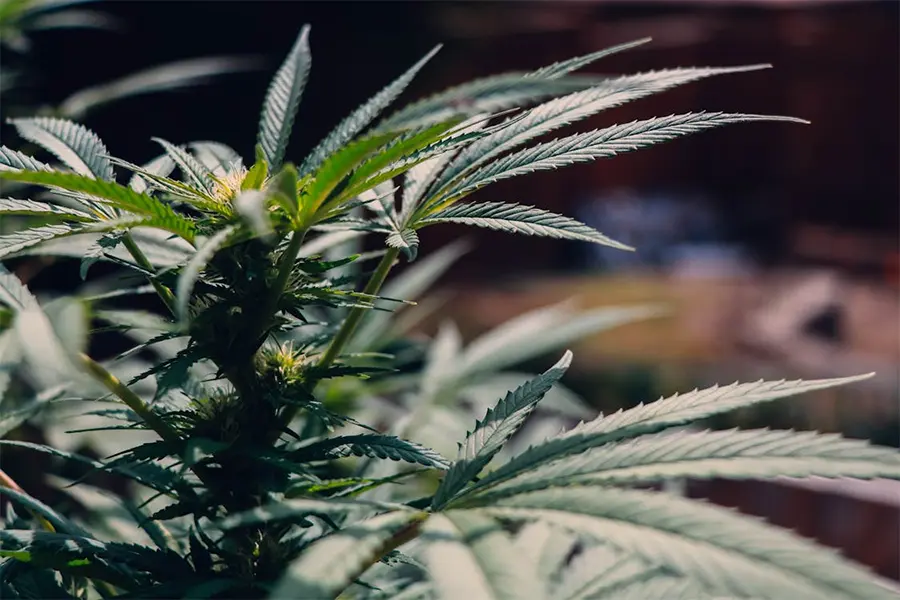
When most people think about cannabis, they think about THC and the “high” that comes from smoking or vaping flower. What often gets overlooked is that all cannabis begins in a raw form, rich in a cannabinoid called THCA (tetrahydrocannabinolic acid). Before heat is applied, before combustion, vaporization, or baking, cannabis flower is dominated by THCA, not THC.
We believe cannabis education matters just as much as cannabis access, and THCA is one of the clearest examples of how much more there is to understand about this plant.
What Is THCA?
THCA is the naturally occurring precursor to THC. In the living cannabis plant, cannabinoids exist primarily in their acidic forms, including THCA, CBDA, and CBGA. THC only appears after decarboxylation, a heat-driven chemical process that alters THCA’s molecular structure.
This distinction is important because raw cannabis does not produce the same effects as heated cannabis. THCA interacts with the body differently than THC, engaging distinct biological pathways that are only beginning to be fully understood.
THCA as a Powerful Anti-Inflammatory
Growing research interest has placed THCA at the center of conversations around inflammation and immune regulation.
A 2020 peer-reviewed study published in the British Journal of Pharmacology examined THCA in a collagen-induced arthritis model and found that it reduced joint inflammation and tissue damage, limited infiltration of inflammatory immune cells, suppressed expression of inflammatory and cartilage-degrading genes, and acted through PPARγ and CB1 receptor pathways rather than classic THC signaling alone.
The study demonstrated therapeutic activity without producing psychoactive effects, suggesting THCA may be relevant in contexts where long-term inflammation management is the goal.
These findings position THCA as a compound of interest in discussions around arthritis, inflammatory bowel disease (IBD), and other chronic inflammatory conditions.
Why Raw Cannabis Matters
Because THCA converts into THC when exposed to heat, raw cannabis is the most direct way to engage with THCA itself. This can include fresh or gently dried flower, cold-pressed cannabis juice, raw tinctures or capsules, and other unheated, THCA-rich preparations.
Once cannabis is smoked, vaped, or baked, most of the THCA is transformed. That shift may be desirable for some uses, but it represents a fundamentally different relationship with the plant.
Raw cannabis reflects an approach centered on biochemical support rather than intoxication, and it opens the door to uses that do not rely on activation by heat.
THCA for Pets and People
Interest in THCA extends beyond human wellness into discussions around animal care. Like humans, pets have an endocannabinoid system, which helps regulate pain, inflammation, immune response, and balance. This shared physiology is why cannabinoids are increasingly being explored as complementary tools when conventional options provide limited relief.
THCA stands apart because it engages inflammatory pathways without the neurological effects associated with THC. This distinction has made it part of broader conversations around mobility, comfort, and quality of life, particularly where sensitivity to THC is a concern.
That said, pets are not small humans. Dogs, in particular, have a much higher concentration of cannabinoid receptors in the brain, making them far more sensitive to THC exposure. Any cannabis-based approach for animals must emphasize careful formulation, conservative dosing, and professional oversight. Learn more about Cannabis for Pets.
Important note: Cannabis affects animals differently than people. Always consult a licensed veterinarian, ideally one familiar with cannabinoid therapy, before introducing any cannabis product to a pet. Vaporized, smoked, or heated cannabis should never be given to animals, and human edibles are unsafe due to dosing challenges and potentially toxic ingredients.
THCA vs THC vs CBD
| Compound | Intoxicating? | Primary Role |
|---|---|---|
| THCA | No | Anti-inflammatory, neuroprotective, metabolic signaling |
| THC | Yes (after heat) | Pain relief, appetite, sleep, euphoria |
| CBD | No | Broad anti-inflammatory, anxiolytic, seizure support |
Unlike THC, THCA does not bind to CB1 receptors in the brain in a way that causes intoxication. Yet research shows it still modulates CB1 activity and activates PPARγ, a receptor involved in inflammation, metabolism, and immune regulation.
A Broader View of Cannabis Healing
THCA highlights an often-missed truth about cannabis. It is not a single-effect plant, but a complex botanical with multiple modes of action, many of which are altered or lost once heat is applied.
As research evolves, raw cannabis and THCA-focused approaches may play a growing role in inflammation management, autoimmune and gastrointestinal support, neuroprotective research, and daily wellness routines that do not rely on intoxication.
As always, education comes first. If you are curious about THCA-rich flower or raw cannabis options, our team is here to help you explore responsibly.
This blog is for educational purposes only and is not intended as medical or veterinary advice. Always consult a qualified healthcare or veterinary professional before starting any new wellness regimen.
Sources
- Palomares et al., 2020 – Δ9-Tetrahydrocannabinolic acid alleviates collagen-induced arthritis: Role of PPARγ and CB1 receptors, British Journal of Pharmacology.
Peer-reviewed preclinical research demonstrating THCA’s anti-inflammatory effects and its activity via PPARγ and CB1 receptor pathways.
https://pmc.ncbi.nlm.nih.gov/articles/PMC7429492/ - Williams, A. (2025) – What Is THCA and What Are the Benefits of This Cannabinoid?, Leafly.
Overview of THCA’s role in raw cannabis, non-intoxicating properties, decarboxylation, and emerging therapeutic uses.
https://www.leafly.com/news/cannabis-101/what-is-thca-and-what-are-the-benefits-of-this-cannabinoid